Employer Not Paying? Help With Wage Arrears and Holiday Pay in NZ

Get paid what you’re owed – We Fight for Your Rights

Start My Free Case Review

Talk with one of our friendly team members today!

Are You in the Right Place?

If your employer is not paying you correctly – or at all – you have legal rights under New Zealand employment law. Wage arrears occur when an employer fails to pay an employee the wages they are legally owed. This can include unpaid hours worked, late wage payments, incorrect holiday pay, or missing entitlements. 

You may have a wage or pay claim if:

Your employer missed a scheduled payday or paid you late

You were not paid for all hours you worked, including overtime or training time

Your holiday pay or annual leave entitlements were calculated incorrectly

You did not receive your final pay after leaving a job

Your employer is withholding wages or claiming payroll problems repeatedly

You have been underpaid relative to your employment agreement or minimum wage obligations

If any of the above apply to you, you may be able to recover the money owed and raise a personal grievance. Sacked Kiwi can help you understand your options. 

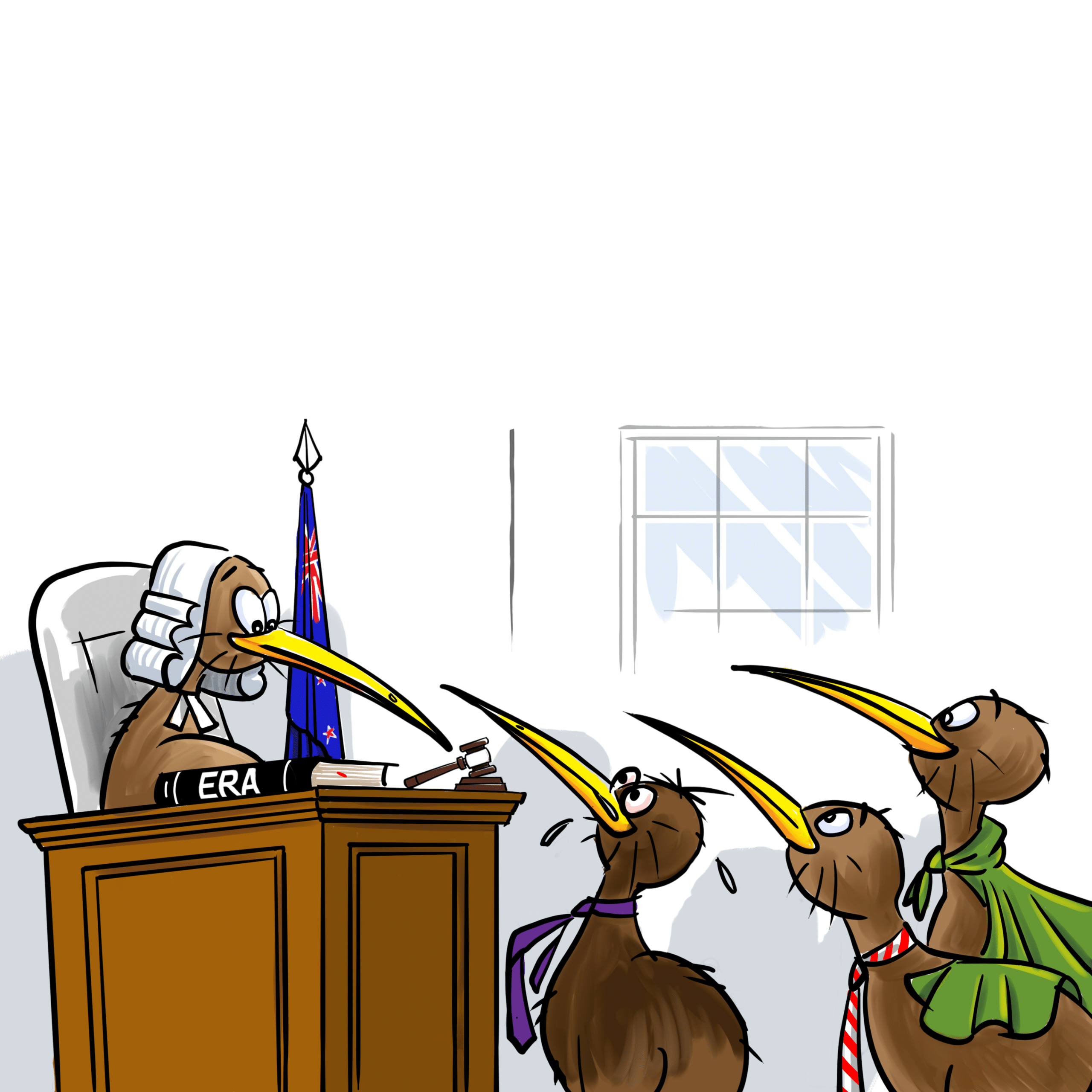
Sacked Kiwi at the ERA

What counts as unpaid wages or wage arrears?

Employers in New Zealand are legally required to pay employees the wages agreed in their employment contract, on the agreed payday. Failure to do so is a breach of employment law. 

Common signs of a wage payment issue include: 

  • Missing payday payments with no explanation 
  • Being paid late on a repeated basis 
  • Employer citing ongoing payroll problems 
  • Wages withheld following a resignation or dismissal 
  • Being paid less than the agreed rate or less than minimum wage 

If your employer is not paying wages owed to you, you may be entitled to recover that money along with additional compensation.

How Sacked Kiwi Can Help

We are employment advocates who specialise in helping New Zealand employees recover unpaid wages and resolve pay disputes. 

We support you by: 

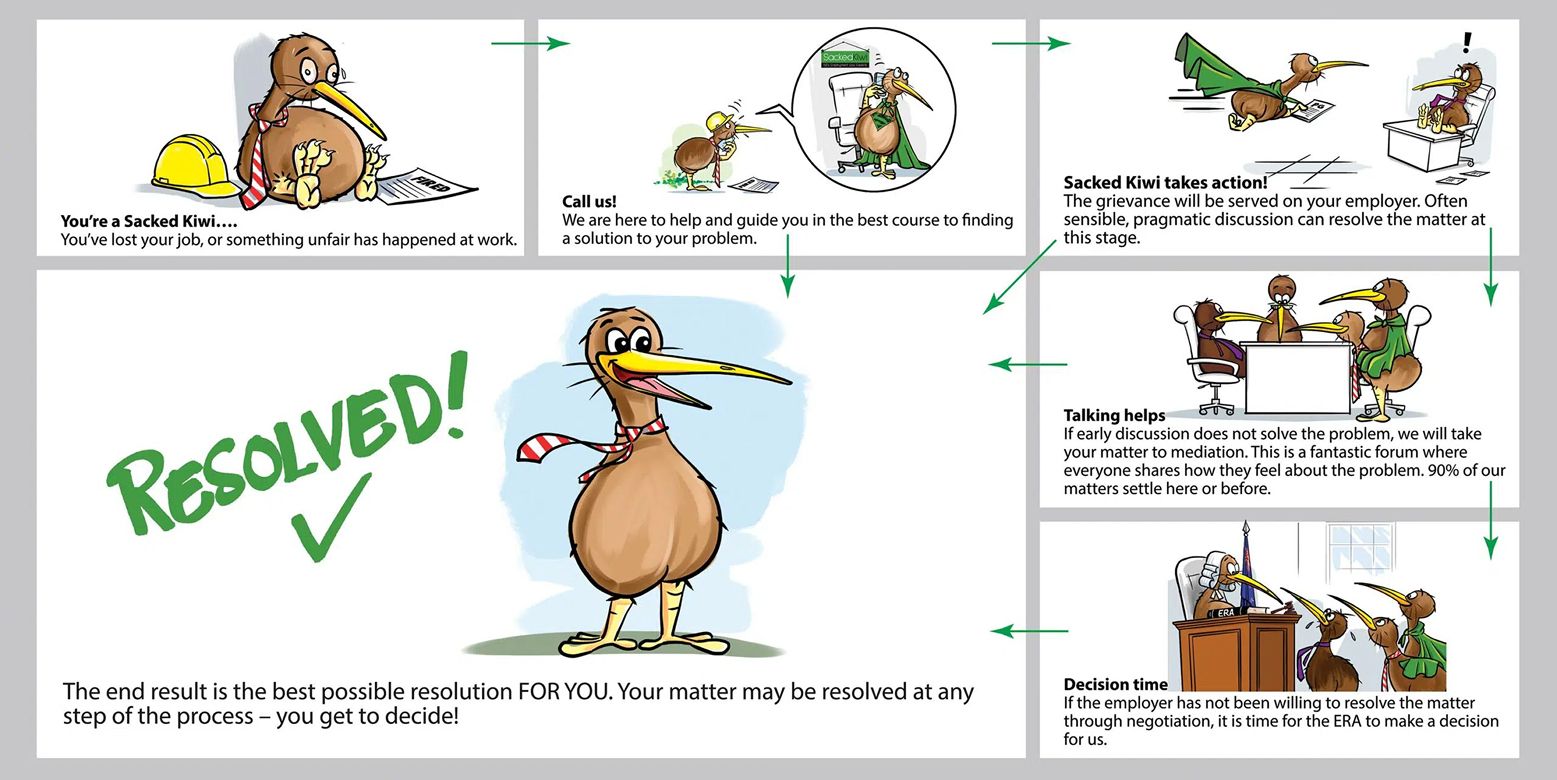
Reviewing your situation and advising on your legal rights 

Raising a formal personal grievance on your behalf 

Representing you in MBIE mediation 

Escalating to the Employment Relations Authority (ERA) if needed 

Pursuing penalties against your employer for wage non-payment where applicable 

You're not alone - and you deserve to be paid

Not being paid for work you’ve done is stressful, demoralising, and financially damaging. Many employees don’t know whether they have the right to take action, or feel uncertain about challenging their employer. 

Many of our clients come to us feeling frustrated and powerless – unsure whether the amount they’re owed is worth pursuing, or worried about the impact on their job. 

We’re here to give you clear, practical guidance and fight for what you’re owed. 

Sacked Kiwi NZ's Employment Law Experts left speech mark

Testimonials

Unfair employee dismissal happens all too often and it shouldn't be accepted or tolerated.
We invite you to read the experiences of the people we have helped over the years.

Why you should seek professional help

  • Deadlines apply: Most personal grievances must be raised within 90 days of the issue arising – act quickly to protect your rights 
  • Free government mediation exists: MBIE provides confidential, free mediation – having proper support significantly improves outcomes 
  • Potential remedies: You may be entitled to recovery of unpaid wages, compensation, penalties against your employer, and interest on amounts owed 
  • Minimum wage protections: All employees are entitled to at least the NZ minimum wage for all hours worked – this cannot be contracted out of 

Why choose Sacked Kiwi

We help employees across New Zealand challenge unfair treatment.

NZ-wide employment advocacy, focused entirely on employee rights 

No-win, no-fee service available 

Clear, practical advice – we explain your options in plain English 

Strong representation at mediation and the ERA 

Getting Started is Simple:

Step 1

Contact us for a free, confidential case review

Tell us what wages or entitlements you believe you are owed and share any payslips, contracts, or communications you have. 

Step 2

We assess your situation

We review the details, confirm what you are legally owed, and advise on the best path to recovering your pay.

Step 3

Leave the rest to us

We handle the paperwork, negotiations, and representation – you focus on getting back on your feet. 

Step-by-step

Employees must be paid for all authorised hours worked. This includes: 

  • Regular shift hours 
  • Overtime hours (where agreed or required) 
  • Mandatory training time 
  • Time spent at work before or after a shift at the employer’s request 

Minimum wage laws apply to all hours worked. An employer cannot refuse to pay for time an employee performed authorised work – regardless of the reason given.

Wage arrears are wages owed to an employee that were not paid when they were due. They can arise from: 

  • Delayed or missed wage payments 
  • Consistent underpayment relative to the agreed rate 
  • Unpaid entitlements such as allowances or penal rates 
  • Back pay owed from a period of underpayment 

 Payroll in arrears refers to a payment arrangement where wages are paid after the period worked – this is a normal practice. However, if wages from an arrears arrangement are not paid on time, that becomes a legal issue. 

  • Under the Holidays Act 2003, employees are entitled to paid annual leave and public holiday pay. Common holiday pay issues include: 

    • Incorrect calculation of annual leave pay 
    • Unpaid or underpaid annual leave on resignation or dismissal 
    • Public holiday pay not included in final pay 
    • Incorrect leave accrual due to payroll system errors 

     Holiday pay calculations can be complex, particularly for employees with irregular hours. If you believe your leave entitlements have been miscalculated, we can help assess your situation. 

Steps to take if your employer is not paying wages: 

  1. Document all missing or incorrect payments – dates, amounts, and what was expected 
  2. Raise the issue directly with your employer and request a written explanation 
  3. Seek independent employment advice – the sooner, the better 
  4. File a formal personal grievance or complaint if the issue is not resolved 
  5. Escalate to MBIE mediation or the Employment Relations Authority if needed 


  • Your employment agreement and any variations or amendments 
  • Recent payslips and bank records showing payment history 
  • A summary of payments missed, late, or incorrectly calculated 
  • Any correspondence with your employer about pay issues 

(Don’t worry if you don’t have everything –  we will help you work through what’s available.)

  • Unpaid wages – taking action to get your pay (Community Law NZ – communitylaw.org.nz) 
  • Minimum wage and pay – Employment New Zealand (employment.govt.nz) 
  • Holidays Act 2003 – Employment New Zealand (employment.govt.nz) 
  • MBIE Mediation service – Ministry of Business, Innovation and Employment 
Sacked Kiwi Bird on the Phone | unfair dismissal

Your Job, Your Rights, Our Fight

Frequently Asked Questions

Can my employer refuse to pay me for hours I have worked?

No. If you performed authorised work, your employer is legally required to pay you for that time. Refusing to pay for hours worked is a breach of employment law and can result in personal grievance claims and penalties against the employer.

What are wage arrears?

Wage arrears are wages that were owed to an employee but not paid when they were due. This can include unpaid hours, underpaid wages, or entitlements that were missed. Employees can take action to recover wage arrears through the personal grievance process or by raising a formal complaint.

What should I do if my employer missed my payday?

 First, document the missed payment and contact your employer in writing to request an explanation and a date for payment. If the issue is not resolved promptly, seek employment advice. Repeated late payments or refusal to pay are serious employment law matters that may justify a personal grievance. 

My employer says they can't afford to pay me - what are my rights?

An employer’s financial difficulty does not remove their legal obligation to pay employees. Wages are a protected entitlement under New Zealand law, and employees are generally treated as priority creditors if a business becomes insolvent. You still have the right to pursue recovery of unpaid wages.

Is incorrect holiday pay the same as unpaid wages?

While holiday pay is a separate entitlement under the Holidays Act 2003, incorrectly calculating or failing to pay holiday pay is still a legal breach. You can recover underpaid holiday pay through the same process as unpaid wages, and you may also be entitled to compensation.

How long do I have to make a claim for unpaid wages?

Most personal grievances must be raised within 90 days of the issue arising. However, wage recovery claims may have different timeframes depending on the nature of the claim. It is best to seek advice as soon as possible to understand the deadlines that apply to your situation.

Can I claim unpaid wages if I have already left the job?

Yes. You can still pursue unpaid wages after leaving employment. This includes any wages owed during your employment as well as final pay entitlements such as accrued annual leave that were not paid correctly on termination.

Take action today - you deserve to be paid for your work

90-day deadline: Most personal grievances must be raised within 90 days – don’t wait and risk missing your window. 

What happens next: We’ll assess your case, calculate what you’re owed, and act on your behalf – often starting with free MBIE mediation. 

Talk to Sacked Kiwi: Call 0508 227 799, or request a Free Case Review via the form above