Sexual Harassment at Work - Know Your Rights in New Zealand

No Win, No Fee  We Fight for Your Rights

Start My Free Case Review

Talk with one of our friendly team members today!

Are You in the Right Place?

Sexual harassment in the workplace is serious, and more common than many people realise. If you have been subjected to unwanted sexual behaviour at work, you have legal rights under New Zealand employment law. 

You may have a sexual harassment claim if: 

You have been subjected to unwanted sexual comments, jokes, or advances by a colleague, manager, or employer

You have received inappropriate messages, images, or requests of a sexual nature at work

You have experienced unwanted physical contact of a sexual nature

You have been made to feel uncomfortable, intimidated, or humiliated by sexual behaviour in your workplace

You raised concerns about harassment and faced retaliation or were dismissed

You resigned because the harassment made your workplace unbearable (constructive dismissal)

If any of the above apply to you, you may be eligible to raise a personal grievance. You have up to 12 months from the date of the harassment to take action.

Sexual harassment at work is illegal in New Zealand. Learn your legal rights, employer responsibilities, and how Sacked Kiwi’s No Win, No Fee experts can help.

What counts as sexual harassment in the workplace?

Under New Zealand law, sexual harassment is unwanted behaviour of a sexual nature that makes a person feel offended, humiliated, or intimidated. It can be a single serious incident or a pattern of repeated behaviour. 

This includes situations where: 

  • The behaviour was unwelcome, regardless of whether the harasser intended harm 
  • A person in a position of authority made the behaviour feel unavoidable 
  • The conduct created a hostile, uncomfortable, or unsafe working environment 
  • Complaints were ignored or dismissed by the employer 
  • The target felt unable to refuse due to fear of professional consequences 

If any of these sound familiar, you may have a strong case. 

How Sacked Kiwi Can Help

We are employment advocates who support New Zealand employees experiencing sexual harassment at work. We help you understand your options and take action. 

We support you by: 

Reviewing your situation and advising on your legal options 

Helping you document evidence and build your case 

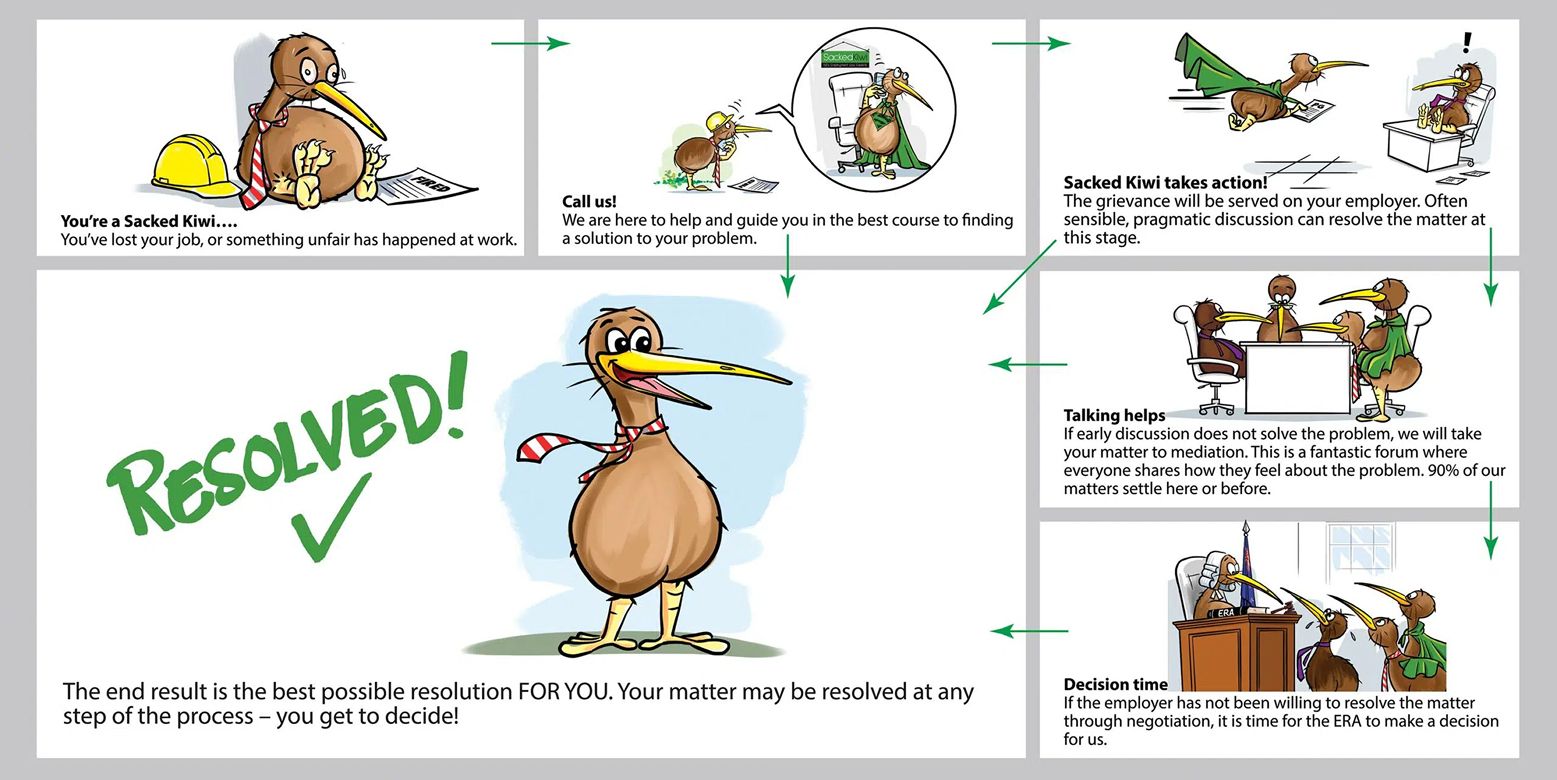
Raising a formal personal grievance on your behalf 

Representing you in MBIE mediation 

Escalating to the Employment Relations Authority (ERA) if needed 

Pursuing remedies such as compensation for hurt and humiliation, and lost wages 

Most sexual harassment cases are eligible for our No Win, No Fee service – meaning you don’t pay unless we win. We’ll always tell you upfront if your case qualifies. 

We’ll always tell you upfront if your case qualifies. 

You're not alone - and what you’re feeling is normal

Experiencing sexual harassment at work can leave you feeling confused, ashamed, angry, and unsure of where to turn. These reactions are completely understandable. 

Many of our clients come to us feeling powerless – unsure whether what happened to them “counts” or whether anyone will take them seriously. 

We will. We’re here to listen, guide you through every step, and help you take back control. 

Sacked Kiwi NZ's Employment Law Experts left speech mark

Testimonials

Unfair employee dismissal happens all too often and it shouldn't be accepted or tolerated.
We invite you to read the experiences of the people we have helped over the years.

Why you should seek professional help

  • Deadlines apply: Personal grievances for sexual harassment must be raised within 12 months of the incident (longer than the standard 90-day limit for other employment issues) 
  • Free government mediation exists: MBIE provides confidential, free mediation – proper preparation significantly improves outcomes 
  • Potential remedies: Compensation for hurt and humiliation, lost wages, and other remedies may be available depending on the facts of your case 
  • Your employer has obligations: NZ employers are legally required to prevent and address workplace sexual harassment – if they failed to act, that matters 

Why choose Sacked Kiwi

We help employees across New Zealand challenge unfair treatment.

NZ‑wide employment advocacy, focused on employee rights 

No‑win, no‑fee 

Experienced, empathetic advocates who take workplace harassment seriously 

Clear advice on your options – so you always know what happens next 

Getting Started is Simple:

Step 1

Contact us for a free, confidential case review

Tell us what happened and share any documents, messages, or evidence you have.

Step 2

We assess your situation

We review the details, confirm your legal rights, and advise on the strength of your case.

Step 3

Leave the rest to us

We handle the paperwork, negotiations, and representation – you focus on your wellbeing and moving forward. 

Step-by-step

  • The Employment Relations Act 2000 and the Human Rights Act 1993 both prohibit sexual harassment in the workplace. 
  • Sexual harassment is defined as unwelcome conduct of a sexual nature that causes offence, humiliation, or intimidation. 
  • A single serious incident can constitute harassment – it does not need to be a repeated pattern of behaviour. 
  • Employers are legally obligated to prevent and address sexual harassment in their workplaces. 
  • Sexual jokes, comments, or innuendo directed at or in front of an employee 
  • Unwanted requests for sexual favours, including when linked to job security or promotion 
  • Sending or displaying sexually explicit images, messages, or content 
  • Repeated unwanted flirting, invitations, or romantic advances after being told to stop 
  • Unwanted physical contact of a sexual nature 
  • Verbal sexual harassment, such as persistent inappropriate remarks about appearance 
  • Workplace sexual harassment is a serious employment law matter that can result in personal grievance claims, significant compensation, and reputational consequences for employers. 
  • In more serious cases involving sexual assault or criminal conduct, police involvement may be appropriate, independent of any employment action. 
  • Both pathways – employment and criminal – can run alongside each other if needed. 
  • A written record of incidents (dates, times, what happened, who was present) 
  • Any messages, emails, or other communications relating to the harassment 
  • Details of any complaints you made to your employer and their response 
  • Your employment agreement 

(Don’t worry if you don’t have everything – we’ll help fill gaps.) 

  • Sexual harassment guidance – WorkSafe NZ (worksafe.govt.nz) 
  • Harassment at work – Employment New Zealand (employment.govt.nz) 
  • Personal grievances – Employment New Zealand (employment.govt.nz) 
  • MBIE Mediation service – Ministry of Business, Innovation and Employment 
  • Human Rights Commission – New Zealand (hrc.co.nz) 
Sacked Kiwi Bird on the Phone | unfair dismissal

Your Job, Your Rights, Our Fight

Frequently Asked Questions

What is the legal definition of sexual harassment in NZ?

Under New Zealand law, sexual harassment is unwanted conduct of a sexual nature – including comments, physical contact, messages, or requests for sexual favours – that causes a person to feel offended, humiliated, or intimidated. It applies in workplaces, educational settings, and other environments.

How is sexual harassment different from sexual assault?

Sexual harassment generally refers to unwanted conduct of a sexual nature in a workplace or similar context, and is addressed through employment and human rights law. Sexual assault involves criminal conduct and is handled by police. Both can occur in a workplace context, and it is possible to pursue both an employment grievance and a police matter at the same time.

What should I do if I am being sexually harassed at work?

Document the incidents as soon as possible, including dates, times, and details of what happened. Keep any relevant messages or evidence. Report the behaviour to your employer if it is safe to do so. Seek independent employment advice early  the sooner you act, the more options you have available.

Can I raise a personal grievance if my employer ignored my complaint?

Yes. If you reported sexual harassment to your employer and they failed to investigate it properly or take appropriate action, that failure can itself form part of your personal grievance. Employers have a legal obligation to address harassment complaints.

What compensation can I receive for workplace sexual harassment?

Remedies may include compensation for hurt and humiliation, reimbursement of lost wages, reinstatement, and other remedies depending on your circumstances. The Employment Relations Authority assesses each case on its individual facts.

Can I remain anonymous when reporting sexual harassment?

In formal processes such as mediation or Employment Relations Authority hearings, both parties are typically identified. However, the early stages of seeking advice from Sacked Kiwi are confidential, and we can discuss your options before any formal steps are taken.

Take action today - your experience deserves to be taken seriously

12-month deadline: Sexual harassment personal grievances must be raised within 12 months – don’t miss your window. 

What happens next: We’ll assess your case, explain options, and act on your behalf – starting with a free, confidential case review. 

Talk to Sacked Kiwi: Call 0508 227 799, or request a Free Case Review via the form above