What is Sexual Harassment?
Under Section 108 of New Zealand’s Employment Relations Act 2000, sexual harassment is defined as any unwanted conduct of a sexual nature, whether direct or indirect, that negatively impacts an employee’s work environment, job security, or performance. This includes verbal, physical, or visual actions that create a workplace where an employee feels intimidated, humiliated, or unsafe.
Examples include inappropriate comments, unwelcome touching, repeated sexual advances, or suggestive messages. Employers have a legal duty to take reasonable steps to prevent and address sexual harassment, ensuring a safe and respectful workplace for all employees.
Toll-Free Employment Law Helpline ↗
Sexual harassment at work is a growing issue in New Zealand, impacting employees across all industries. This guide covers everything you need to know about sexual harassment in NZ workplaces—including legal rights, reporting steps, and how Sacked Kiwi’s No Win, No Fee employment law advocates can help you seek justice.
Is Sexual Harassment Illegal in New Zealand?
Under New Zealand law, workplace sexual harassment is illegal, and employees have the right to report misconduct without fear of retaliation.
Employment Relations Act 2000 (ERA)
The Employment Relations Act 2000 establishes the legal framework for employer-employee relationships, ensuring that workers have the right to a safe and respectful workplace.
Under this act, employees can file a personal grievance, per section 103(1)(d) if they experience sexual harassment from:
- Their employer (e.g., a manager or supervisor).
- A co-worker or another employee.
- A customer or client whose behavior is not addressed by the employer.
An employee can raise a grievance for both Quid Pro Quo and Hostile Work Environment Sexual Harassment.
Section 123 of the Employment Relations Act 2000 provides victims of workplace sexual harassment with legal remedies. If you intend to file a personal grievance against your employer, seeking legal advice is crucial. Employment law can be complex, and properly drafting legal documents is essential to ensuring your case is as strong as possible.
Human Rights Act 1993 (HRA)
The Human Rights Act 1993 protects all individuals in New Zealand, including employees, independent contractors, and volunteers, from unwanted sexual behavior that is either serious, repeated, or tied to preferential or detrimental treatment.
According to the Human Rights Commission, sexual harassment is defined as any unwelcome or offensive sexual behavior that:
- Is repeated or severe enough to cause harm.
- Includes implied or explicit promises of preferential treatment (e.g., a promotion in exchange for sexual favors).
- Threatens negative consequences if the victim refuses (e.g., job loss or demotion).
This act covers sexual harassment that occurs in person, via text messages, email, social media, or any digital platform.
The Human Rights Commission provides an alternative avenue for addressing workplace sexual harassment complaints. Employees, contractors, and volunteers can file a complaint under the Human Rights Act 1993, and the Commission offers free and confidential mediation services to help resolve disputes.
However, for employment-related sexual harassment cases, it is generally recommended to pursue a personal grievance through the Employment Relations Authority (ERA), as this process is specifically designed for workplace disputes and can provide more effective legal remedies.
Types of Sexual Harassment
Quid Pro Quo Sexual Harassment
“Quid pro quo” is a Latin phrase meaning “this for that.” In a workplace setting, quid pro quo sexual harassment occurs when a person in a position of power—such as a manager, supervisor, or employer—requests sexual favors in exchange for professional benefits or threatens negative consequences if the request is denied.
This type of harassment is particularly dangerous because it exploits power imbalances and places employees in vulnerable situations where their job security or career growth is at stake.
Workplace Sexual Harassment & Power Imbalance
In Craig v Slater, a recent New Zealand High Court case, the judge advanced the law surrounding sexual harassment claims, particularly where a clear power imbalance exists between the parties. Now, when an employee alleges direct sexual harassment by a senior figure in the workplace, courts are more inclined to recognize that the behaviour was unwelcome, even if the employee did not raise concerns at the time. This shift strengthens legal protections for employees facing harassment from employers or managers who exploit their positions of power, ensuring that silence or delayed reporting does not undermine the credibility of a claim.
What does this mean? It means its easier to bring a claim for sexual harassment against an employer because the Employment Relations Authority recognises an inherent power imbalance between an employer and an employee.
Examples of Quid Pro Quo Harassment
- A manager offering a promotion, raise, or desirable work assignment in exchange for a date or sexual favors.
- A supervisor threatening to fire or demote an employee if they refuse sexual advances.
- A manager repeatedly asks an employee out before a performance review.
- A recruiter or hiring manager implies that a job offer is contingent on engaging in sexual activity.
- A mentor or senior employee promising career opportunities in return for romantic or sexual engagement.
- A contractor or client suggesting ongoing work opportunities in exchange for sexual cooperation.
Hostile Work Environment Sexual Harassment
A hostile work environment is created when repeated or pervasive sexual harassment makes the workplace intimidating, offensive, or unproductive. Unlike quid pro quo harassment, this type does not necessarily involve explicit threats or demands but instead fosters an environment where employees feel unsafe or unable to perform their job effectively.
This can be caused by ongoing verbal, non-verbal, or physical harassment, inappropriate jokes, sexual discussions, suggestive comments, or even the display of sexually explicit materials.
Examples of Hostile Work Environment Harassment
- Regular exposure to sexual jokes, comments, or discussions in the workplace.
- Repeated unwanted advances, flirting, or sexual remarks make employees uncomfortable.
- Displaying sexually suggestive images, posters, or videos in shared spaces.
- Coworkers spreading rumors about an employee’s sexual activity or relationships.
- Managers or colleagues making persistent sexualized remarks about an employee’s appearance.
- A culture of sexual innuendo, gossip, or inappropriate teasing that normalizes harassment.
Dealing with Sexual Harassment at Work
Sexual Harassment from a Supervisor or Manager
Sexual harassment becomes especially complex when it involves a supervisor, manager, or someone in a position of authority. The inherent power imbalance in these situations can make it difficult for employees to speak up, particularly if there are weak or inadequate internal reporting structures. Fear of retaliation, job security concerns, or a lack of trust in the complaint process often discourage victims from taking action.
If you experience sexual harassment from a superior, it is crucial to seek independent legal advice as early as possible. An experienced employment lawyer can help you understand your rights, assess your options, and guide you through the best course of action—especially if internal processes seem ineffective or biased. In some cases, external legal support may be the only way to ensure your complaint is taken seriously and properly addressed.
Employers have a legal duty to provide a workplace free from harassment, but when those in power are the perpetrators, accountability often requires outside intervention. If you’re facing harassment from a manager or supervisor, know that you are not alone. Seeking expert guidance can help protect your rights and ensure that you receive the support and resolution you deserve. Sacked Kiwi’s toll-free employment helpline is only one call away.
Sexual Harassment from a Co-Worker
Your employer has a legal duty under both the Human Rights Act 1993 and the Health and Safety at Work Act 2015 to ensure a safe and healthy work environment. If they fail to take reasonable steps to prevent or address sexual harassment, they may be held legally responsible.
If you experience sexual harassment from a coworker, it is essential to document the incidents carefully and report them to your employer as soon as possible. Keeping clear records can strengthen your case and help ensure that the appropriate action is taken to protect your rights.
Dealing with sexual harassment alone can be overwhelming. Our team of employment law experts is just a phone call away, ready to support you and fight for your rights. Contact us today for confidential legal advice and assistance.
Sexual Harassment by a Customer or Client
Sexual harassment in the workplace isn’t limited to interactions between coworkers—it can also come from customers, clients, or third parties. If you experience unwanted conduct of a sexual nature from a client or customer, it is critical to report it to your employer as soon as possible. Employers have a legal obligation to provide a safe work environment, but they can only take action if they are made aware of the issue.
The strongest legal claims often arise when an employer fails to act after being put on notice. If you report harassment and the employer does nothing to address or mitigate the risk, and the behaviour continues, they may be held liable for failing to provide a safe workplace. Beyond taking action against the perpetrator, employers are also expected to support employees throughout the process, ensuring they feel safe, heard, and protected.
If you’re facing sexual harassment from a client or customer, don’t hesitate to seek help. Our employment law experts are here to guide you through your options and ensure your rights are upheld.
Guide to Standing Up to Sexual Harassment for New Zealand Employees
Sexual harassment at work is not only unacceptable—it’s illegal under New Zealand law. If you are experiencing harassment, taking immediate action is crucial to protect your rights and well-being.
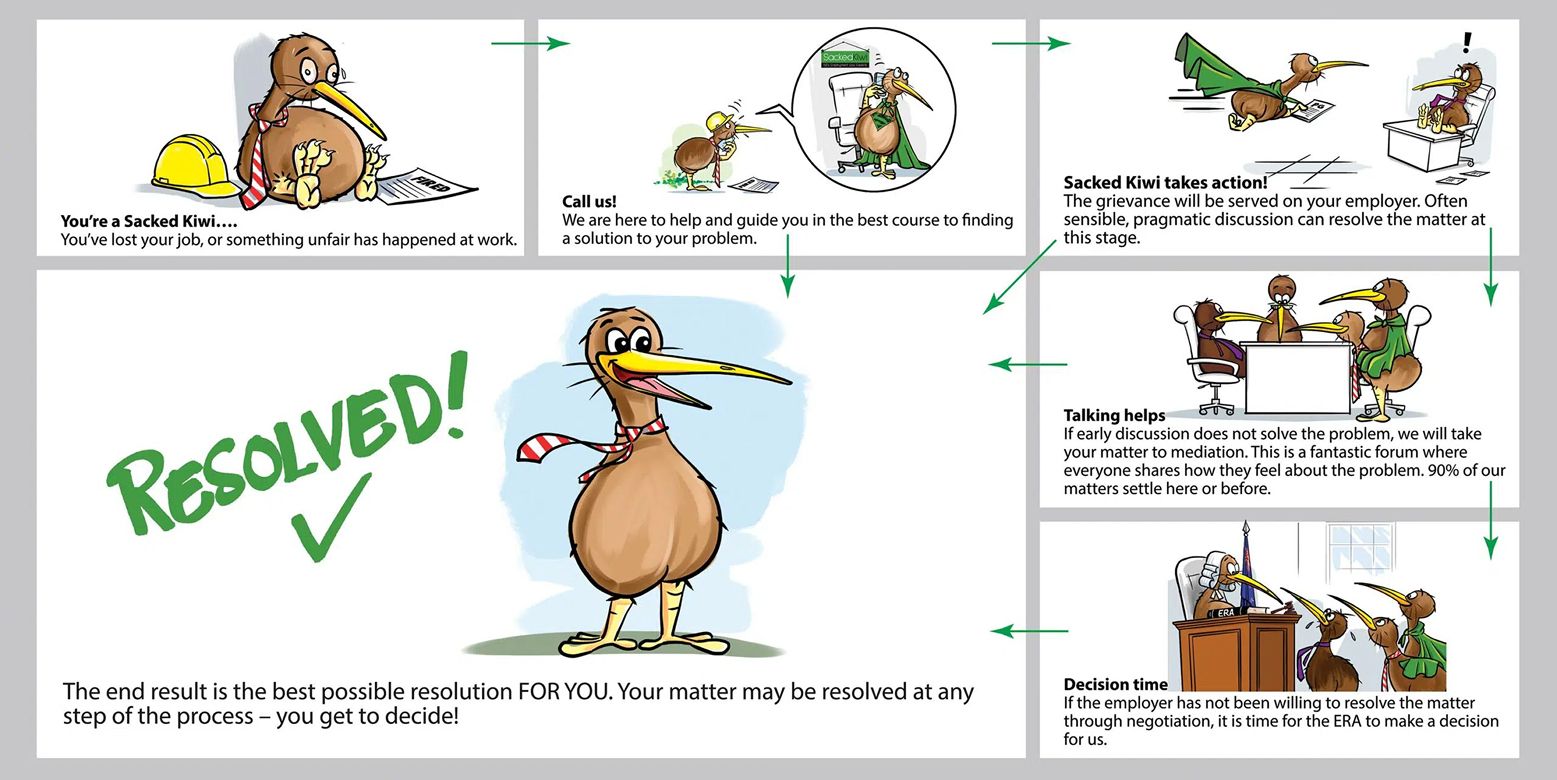
At Sacked Kiwi, we understand how difficult it can be to speak up, especially if you fear retaliation or losing your job. Our expert employment law advocates specialize in workplace harassment cases and can fight for you under our No Win, No Fee policy.
If you’re unsure where to start, call our toll-free employment law helpline for free legal advice on your rights and next steps.
1. Keep a Detailed Record of Incidents
Documenting the harassment is one of the most important steps you can take. A well-documented case makes it easier to prove what happened. Include:
- Date, time, and location of each incident.
- A detailed description of what was said or done.
- Names of any witnesses who were present.
- How the harassment affected you, such as stress, anxiety, or job performance issues.
If you’re unsure how to gather and document evidence effectively, our team can guide you on what information will be most helpful in legal proceedings. Need help documenting your case? Call Sacked Kiwi now for expert advice.
2. Report the Harassment Internally
If you feel safe, report the harassment using your workplace’s formal procedures. This may include:
- Notifying your manager, HR department, or a designated contact person.
- Submitting a written complaint to create an official record.
- Requesting an internal investigation or mediation.
However, some employers fail to take complaints seriously—or worse, retaliate against employees who report harassment. Before you make a formal complaint, speak with an employment law advocate at Sacked Kiwi. We can help ensure your rights are protected from the start.
3. Seek Legal Advice and Support
Sexual harassment cases can be complex, and you don’t have to handle this alone. Whether your employer is ignoring the issue, retaliating, or pressuring you to stay silent, legal support can make a difference.
At Sacked Kiwi, we offer:
- Free legal advice through our toll-free employment law helpline.
- Confidential consultations to assess your case.
- No Win, No Fee representation, so you don’t pay unless we win your case.
If you are unsure about your rights, call our helpline today to discuss your options with an expert employment law advocate.
4. Filing a Formal Complaint
If your employer fails to act—or if internal reporting is not an option—you have the legal right to escalate your case.
Sacked Kiwi can guide you through the process and represent you every step of the way. If you’re not sure where to turn, start by calling our employment law helpline for free, no-obligation advice on your next steps.
Common Myths about Sexual Harassment
Myth 1: “It’s just a joke”
Some people believe that sexual comments, innuendos, or crude jokes are harmless. However, intent doesn’t matter—impact does. If a comment or action creates an uncomfortable or hostile work environment, it can legally qualify as harassment.
Myth 2: “Only women experience sexual harassment”
Sexual harassment affects people of all genders, including men and non-binary individuals. The law protects everyone in the workplace, regardless of gender identity.
Myth 3: “If it happens outside of work, it doesn’t count”
Workplace sexual harassment isn’t limited to the office. If harassment occurs at work functions, conferences, business trips, or even via social media, it can still be considered a workplace issue under New Zealand law.
Myth 4: “You should just ignore it”
Ignoring harassment won’t make it stop—in many cases, it gets worse. Reporting sexual harassment is your legal right, and employers must take action once they are made aware of it.
Myth 5: “If I report it, I’ll lose my job”
New Zealand law protects employees from retaliation for reporting sexual harassment. If your employer demotes, dismisses, or discriminates against you for speaking up, they are breaking the law—and you have legal options.
If you suspect you are experiencing workplace sexual harassment, don’t stay silent. Sacked Kiwi’s employment law advocates can help—call our toll-free helpline today for free legal advice.
Legal Disclaimer
The content posted on the Sacked Kiwis website should not be considered or relied upon as legal advice or opinion. The information presented here is not intended to serve as legal guidance. Over time, laws and regulations evolve, potentially altering the accuracy of previously shared information. Updates in jurisprudence or legislation (for example, changes to the Employment Relations Act), which could happen without immediate notice, may render the legal information on this platform outdated or obsolete. Seeking legal advice is always advisable.